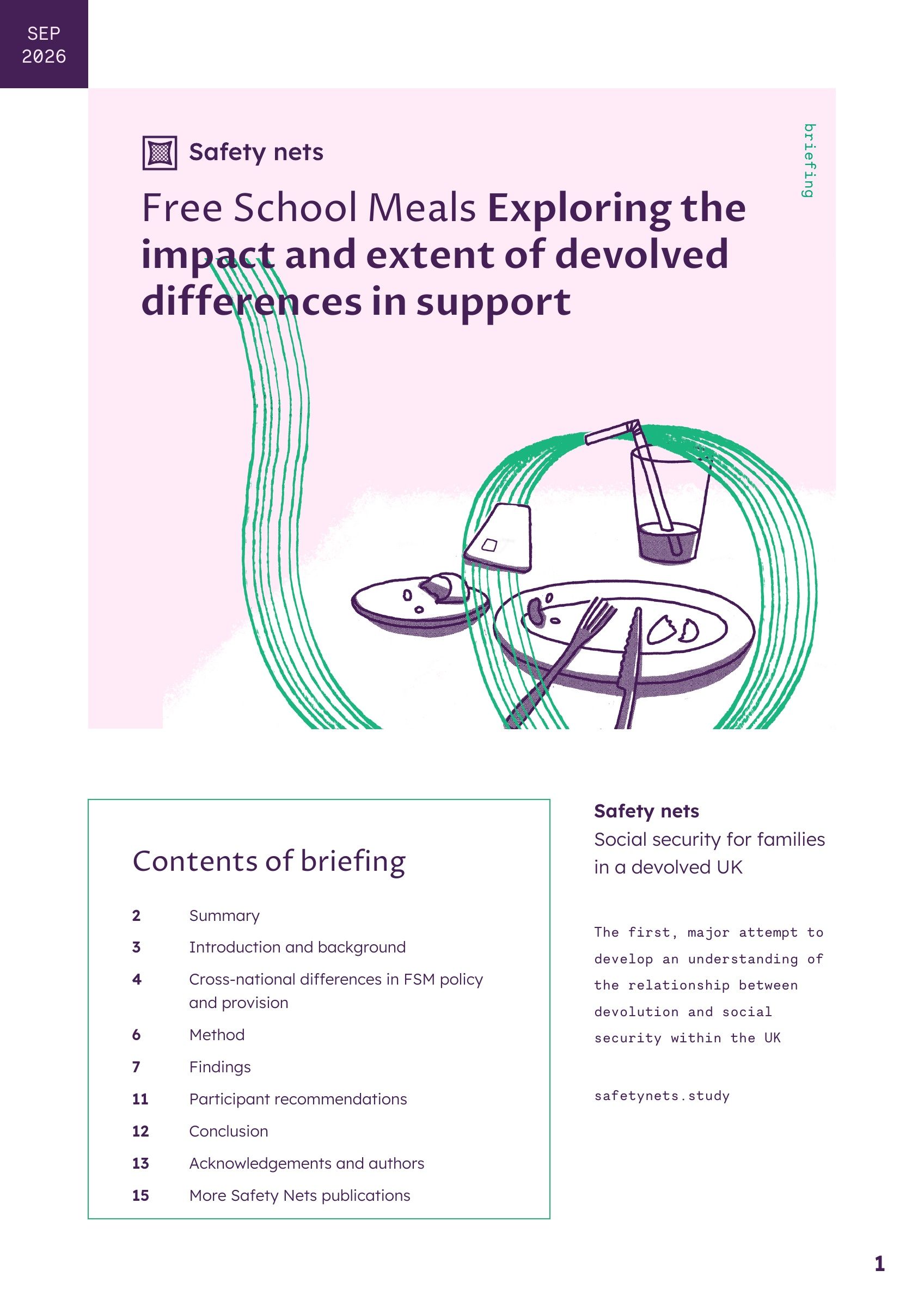
Free School Meals
Exploring the impact and extent of devolved differences in support
Different countries and regions across the UK have adopted markedly different approaches to free school meal (FSM) entitlement and provision, creating significant disparities in access and support for children and families. Research conducted with parents and carers on low incomes from across the UK highlights that devolved approaches to FSM provision can shape children’s experiences in meaningful ways. However, perceptions of unfairness and inconsistency were driven both by the view that participants’ own country had less generous provision and by concern that children elsewhere were also receiving inadequate support.
Participants from across the UK consistently raised concerns about the poor quality and limited choice of food available through FSMs, alongside inadequate provision for children with Special Educational Needs and Disabilities (SEND) and dietary requirements. As a result, many parents reported needing to provide packed lunches despite FSM entitlement, placing additional pressure on already stretched household budgets and undermining the intended benefits of the policy. Overall, the findings reveal a disconnect between the design of FSM policy and the lived experiences of families across the UK.
Participants recommended a series of improvements to free school meal provision. These include:
- Introduce or expand universal free school meal provision across all four UK countries
- Streamline the process for accessing free school meals
- Prioritise the quality, sustainability, and suitability of free school meals, ensuring meals meet children’s dietary, cultural, and nutritional needs
- Involve children and young people directly in the design and planning of school meal provision
Downloads
Authors