
Publications
On this page, we’ll include working papers and publications as they are published. You can also click here for links to external blogs and media coverage of our research.
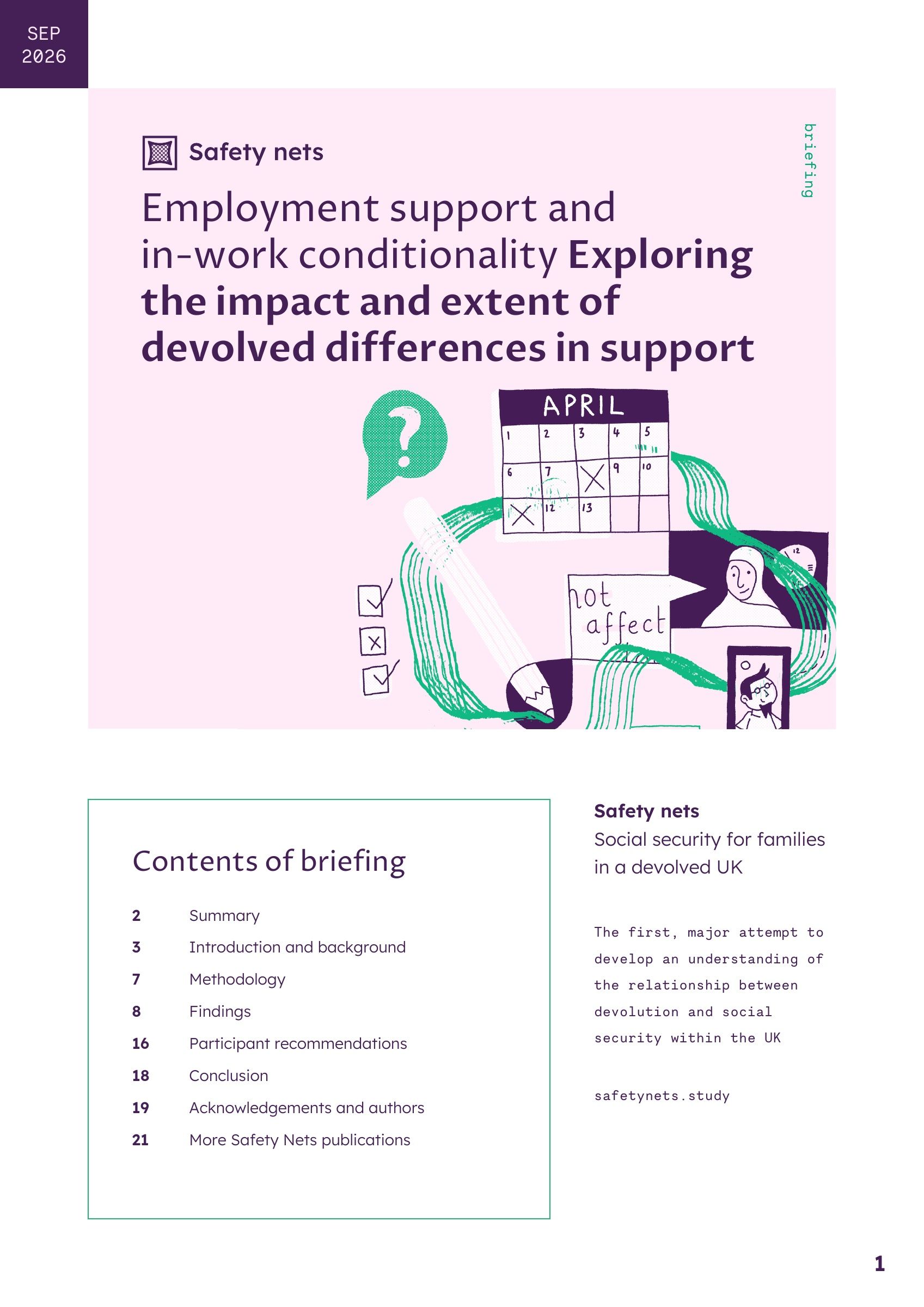
Employment support and in-work conditionality Exploring the impact and extent of devolved differences in support


Employment support and in-work conditionality form a central part of the contemporary welfare system. As these policies have expanded in scope and intensity, their design and delivery continue to evolve across the UK, not least as elements of implementation and oversight are devolved. Exposure to conditionality and sanctions is broadly similar in policy terms across the UK due to parity of the approach underpinning Universal Credit, but employment support is devolved to varying extents across England, Scotland, Wales, and Northern Ireland.
Drawing on interviews conducted as part of the Devolved Conversations project, this briefing explores participants’ experiences of employment support, conditionality, and sanctions across the UK. Experiences of conditionality and sanctions appeared to be broadly consistent between the four countries and, crucially, were not limited to those out of work. Indeed, conditionality remained a significant challenge for those already in employment, particularly those with caring responsibilities or fluctuating hours. Overall, while employment support and social security are partially devolved, participants’ experiences point to the enduring influence of the centralised Universal Credit system, which shapes both access to support and the operation of conditionality across all four countries.
This research shows not only the transformative potential of some employment support interventions for parents and carers living on low incomes across the UK but also how much more could be done to signpost to support. Examples of effective support were identified, but these were typically accessed by chance, rather than through systematic referral.
Participant recommendations include:
- Improve awareness of, access to, and integration of employment support
- Strengthen personalised and wraparound support centred on lived realities
- Expand access to affordable and flexible childcare
- Reframe conditionality to recognise employment and reduce unnecessary burdens
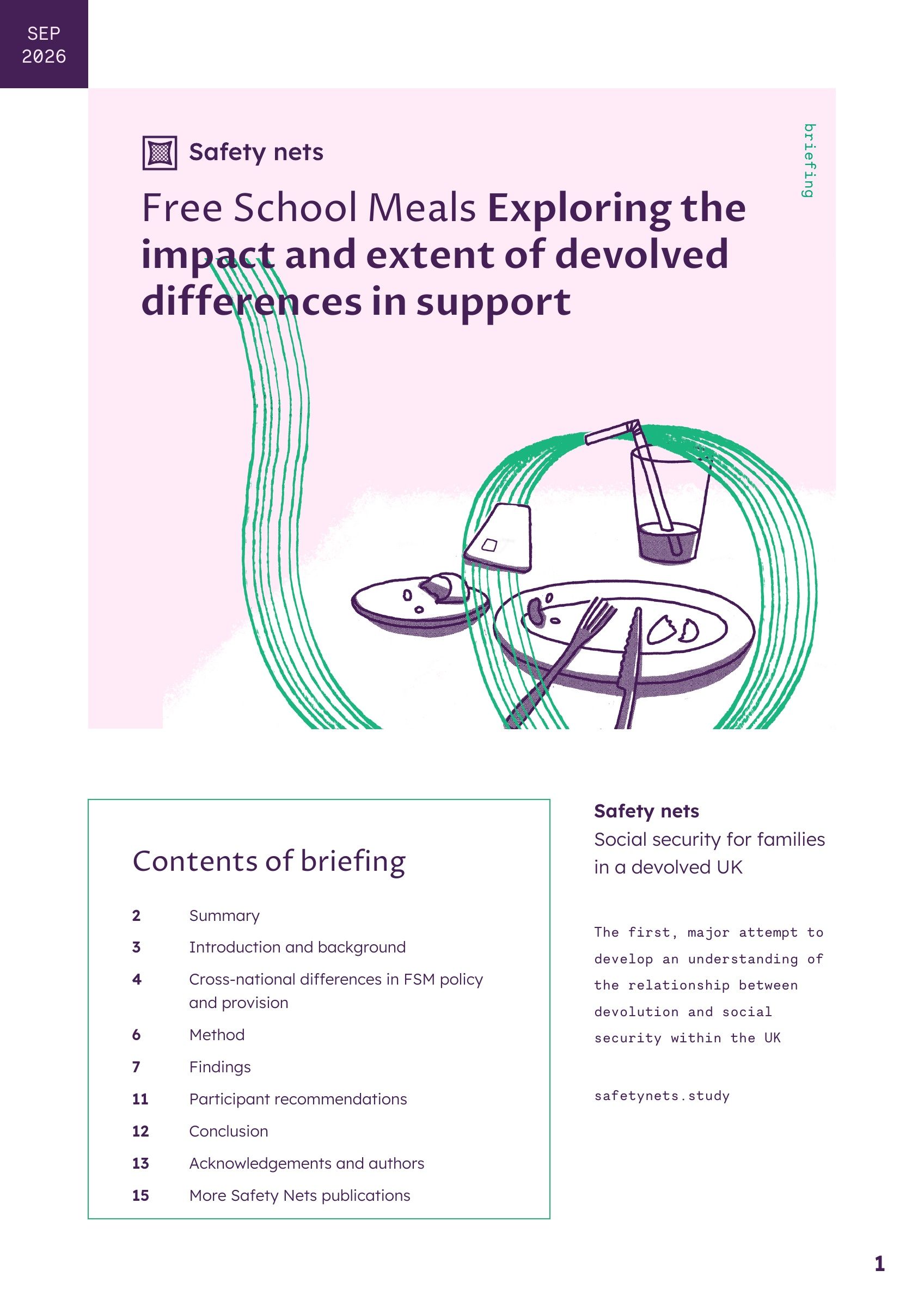
Free School Meals Exploring the impact and extent of devolved differences in support


Different countries and regions across the UK have adopted markedly different approaches to free school meal (FSM) entitlement and provision, creating significant disparities in access and support for children and families. Research conducted with parents and carers on low incomes from across the UK highlights that devolved approaches to FSM provision can shape children’s experiences in meaningful ways. However, perceptions of unfairness and inconsistency were driven both by the view that participants’ own country had less generous provision and by concern that children elsewhere were also receiving inadequate support.
Participants from across the UK consistently raised concerns about the poor quality and limited choice of food available through FSMs, alongside inadequate provision for children with Special Educational Needs and Disabilities (SEND) and dietary requirements. As a result, many parents reported needing to provide packed lunches despite FSM entitlement, placing additional pressure on already stretched household budgets and undermining the intended benefits of the policy. Overall, the findings reveal a disconnect between the design of FSM policy and the lived experiences of families across the UK.
Participants recommended a series of improvements to free school meal provision. These include:
- Introduce or expand universal free school meal provision across all four UK countries
- Streamline the process for accessing free school meals
- Prioritise the quality, sustainability, and suitability of free school meals, ensuring meals meet children’s dietary, cultural, and nutritional needs
- Involve children and young people directly in the design and planning of school meal provision
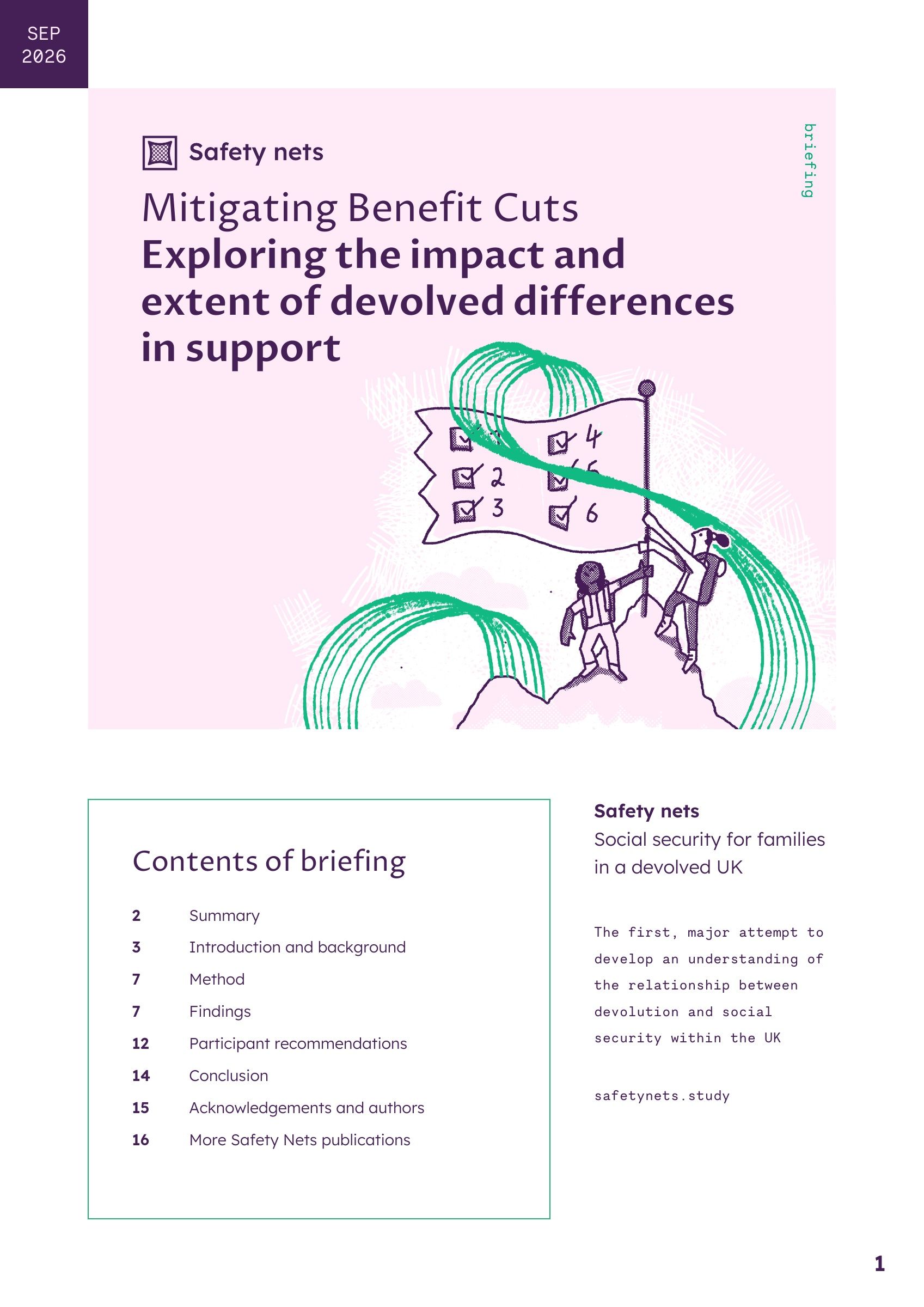
Mitigating Benefit Cuts Exploring the impact and extent of devolved differences in support


Different countries and regions across the UK have sought to reduce the financial impact of benefit cuts by introducing a range of mitigation measures. Research conducted with parents and carers on low incomes from across the UK highlights that, while devolved and localised mitigation measures create meaningful differences across the UK, they are not sufficient to prevent widespread financial hardship among families.
Participants in areas with more comprehensive or targeted support, particularly Scotland, reported relatively less severe hardship. In contrast, localised support aimed at offsetting the Benefit Cap and housing-related cuts – primarily through Discretionary Housing Payments – was seen as inadequate across the UK.
Many participants had been unaware of differences across the UK prior to the study and viewed these differences as unfair. There was limited support for a system in which levels of assistance vary by location. Instead, participants across all nations expressed a clear preference for more consistent and equitable provision, reflecting a shared perception that financial hardship is a UK-wide issue requiring a collective response.
Participants across the UK also highlighted important limitations in the design and delivery of existing mitigations. These include poor communication and promotion, restrictive eligibility criteria, limited duration, and insufficient payment levels. Participants recommended a series of improvements to strengthen the effectiveness of mitigation measures. These include:
- Proactively promoting available support to ensure eligible households are aware of it and can access it.
- Expanding eligibility criteria to reach a broader range of families in need.
- Increasing the value and duration of payments to better reflect the scale of financial pressures.
More broadly, participants emphasised that, while improving mitigations is important, it is not enough on its own. Structural issues within the wider social security system continue to drive hardship. As a result, there was a widely held view that the system should provide adequate baseline support, rather than relying on mitigations to compensate for its shortcomings.
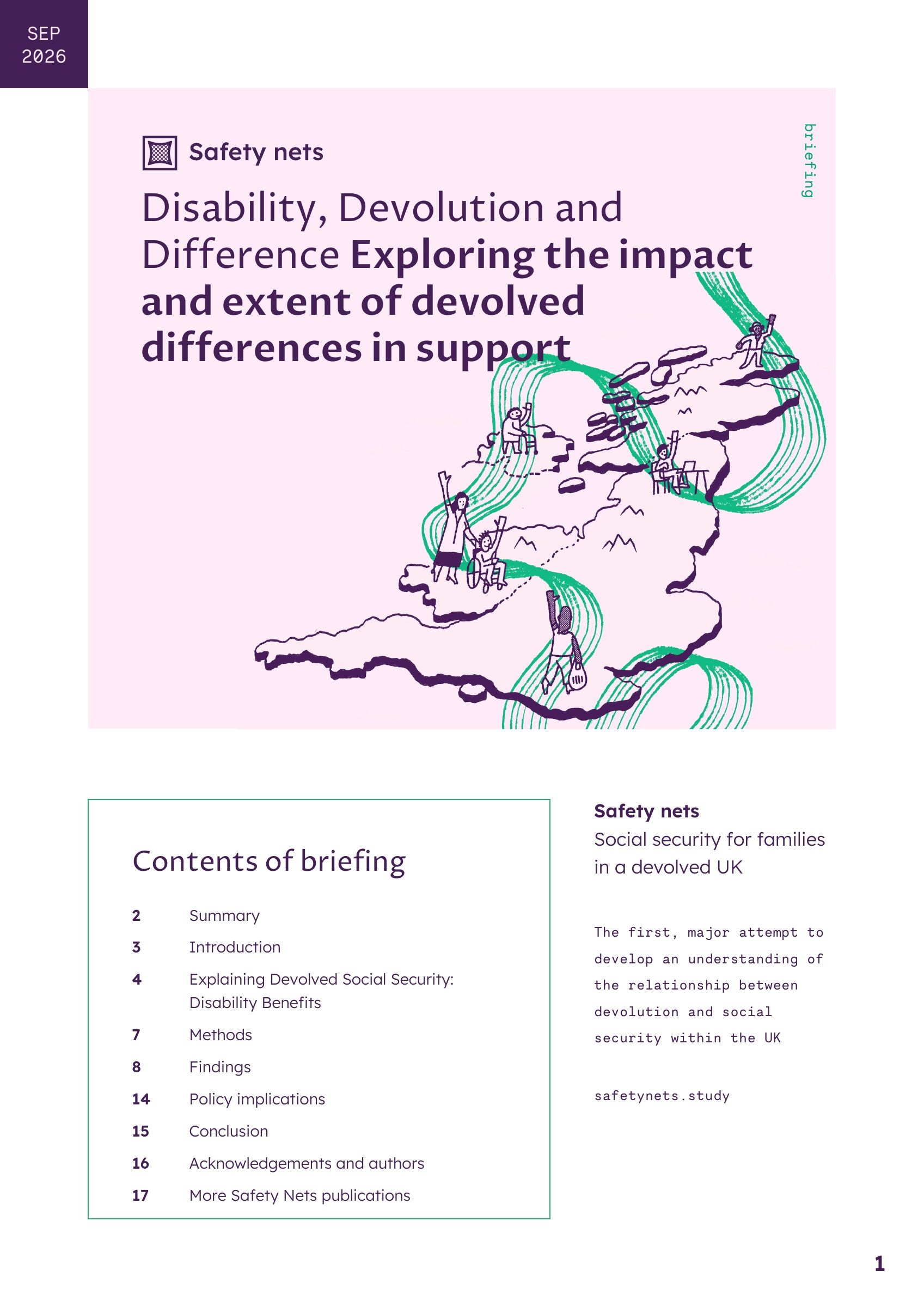
Disability, Devolution and Difference Exploring the impact and extent of devolved differences in support


- In spring 2025, the UK government proposed major cuts to health and disability social security spending totalling £5 billion by the end of 2029/30. These proposed changes included stricter eligibility requirements for Personal Independence Payment (PIP), which the government has since rowed back on, pending a review of the PIP assessment by Sir Stephen Timms. Much of the national debate that followed overlooked the role of devolution in shaping how disability support is currently experienced across the UK. Social Security Scotland (SSS), for example, administers Adult Disability Payment (ADP), while England, Wales, and Northern Ireland continue to use PIP, and these differences are underpinned by divergent social policy perspectives.
- This briefing shares early insights from the Safety Nets research programme on people’s experiences of disability support across the four UK nations. The findings are based upon a workshop conducted with people in receipt of disability benefits in England, Wales, Scotland, and Northern Ireland. Because the workshop involved only a small number of participants (N=12), the findings provide indicative insights only and are a springboard for further research and discussion.
- Participants described similar – and similarly negative – experiences of the PIP application process, and, across the four countries, participants felt there was a common failure by government to recognise the invisible costs of disability. However, there were clear differences between the experiences of participants living in Scotland and those in the rest of the UK. Participants in receipt of Scotland’s ADP reported more positive experiences, characterised by dignity and attentiveness to individual needs.
- These early findings from a small cohort provide a starting point for future discussion on reform of disability benefits, particularly in relation to what devolved systems such as Scotland’s are perceived to be getting right and what the UK as a whole can learn from the approach taken by SSS.
Universal Credit Exploring the impact and extent of devolved differences in support

Universal Credit (UC), a significant reform of the social security system, is now fully rolled out across the UK. Some key aspects of UC policy and practice are devolved. This briefing sets out the first independent investigation into how the devolved differences are experienced and viewed across the four UK countries by drawing on data from innovative online participatory workshops (Devolved Conversations) with participants from each UK country.
The Devolved Conversations explored devolved differences regarding the frequency of UC payments and whether the housing element is paid to the claimant or their landlord. There was a general preference for twice-monthly payments and for the housing element to be paid directly to the landlord. However, there were significant exceptions, and participants emphasised the importance of giving claimants choice over key aspects of their UC claim. The participants were unified in their view that UC should operate in the same way throughout the UK.
The Devolved Conversations also demonstrated significant similarities in experiences of UC across the UK. Despite the devolution of some aspects of UC delivery in Northern Ireland, participants across the UK encountered difficulties with obtaining vital information. Participants from all countries experienced inadequate UC payments, disincentives to enter, and progress in, paid work, and feelings of shame, stigma, and fear when interacting with the UC system.
Participant recommendations for improving UC across the UK include:
- Allow claimants to choose whether they receive their UC award monthly or twice monthly and whether the housing element is paid directly to their landlord or included within their UC award
- Guarantee a minimum level of income through UC that enables individuals and families to meet basic needs
- Provide accessible information regarding the full range of benefits and additional support a claimant may be entitled to
- Take meaningful steps to ensure that all interactions with the Department for Work and Pensions/Department for Communities are grounded in dignity and respect
- Improve work incentives by reducing the taper rate, raising the level of the work allowance, and expanding eligibility for the work allowance
Childcare Exploring the impact and extent of devolved differences in support
This briefing draws on an online participatory workshop (‘Devolved Conversation’) with 16 parents and carers – four from each UK country – alongside four Expert-by-Experience researchers, as part of the Safety Nets project. Using small breakout groups to enable participants to compare experiences across England, Scotland, Wales, and Northern Ireland (NI), the briefing explores how parents and carers experience childcare in the context of increasingly divergent childcare policies following devolution. It examines whether different policy approaches translate into different experiences of childcare.
The findings show that, despite important differences in childcare entitlements and funding models, families across the UK face many of the same barriers. Parents consistently described difficulties in finding clear information about childcare, securing suitable places, and accessing provision that met the realities of work, study, and family life. These challenges were particularly acute for parents of children with special educational needs and disabilities (SEND), families living in rural areas, and those with No Recourse to Public Funds (NRPF).
Participants highlighted that childcare shortages, limited funded hours, high costs, and a lack of wraparound and holiday provision often prevented them from entering, or remaining in, employment. While these challenges are well established in existing research, participants’ accounts reinforce their persistence and highlight how childcare constraints intersect with the demands of the social security system. Many participants also described tensions between childcare availability and Universal Credit (UC) work-related requirements, arguing that expectations to seek, or increase hours of, work frequently failed to reflect the practical constraints they faced.
Although participants had often been unaware that childcare entitlements differed across the UK before taking part in the discussions, most felt that access to high-quality childcare should be more equitable regardless of where families live. At the same time, they emphasised that greater consistency should be achieved by raising standards and support rather than reducing provision in areas where it is already more generous.
The briefing concludes that policy divergence alone has not resolved the structural challenges facing families. Across all four UK countries, participants identified common priorities for reform: improving information about childcare, increasing investment in the childcare workforce and capacity, expanding provision for children with SEND, extending wraparound and holiday childcare, reducing childcare costs, increasing funded hours, making childcare accessible before parents enter work, aligning UC conditionality with childcare availability, improving access for families with NRPF, and reducing inequalities in childcare provision across the UK. Together, these findings suggest that future childcare reforms should focus not only on expanding entitlements but also on ensuring that provision is affordable, accessible, inclusive, and responsive to families' everyday lives.
The findings provide an insight into how devolved childcare policies are experienced in practice. They demonstrate that comparative, lived-experience research can complement policy analysis by highlighting where implementation falls short and identifying priorities for future reform. As governments across the UK continue to develop childcare policy, ensuring that reforms respond to the realities of families' everyday experiences will be essential if childcare is to support children's development, enable parental employment, and reduce poverty and inequality.
The State of Local Welfare


Editorial:
The State of Local Welfare Hayley Bennett Despite a view that the UK welfare state is highly centralised and standardised, available support in terms of cash transfers and welfare services varies across the UK. Not only are there policy differences across the four UK countries; for various reasons there are also notable differences in the support available at the local level. Drivers and experiences of poverty differ and may depend on the neighbourhoods, localities, cities, and regions in which people live. Examining the design and delivery of local welfare, including variations in practices and inequalities in access and entitlements, is essential for improving anti-poverty policymaking. In this State of Local Welfare report, we seek to build a better understanding of what could be termed ‘local welfare’ and its role in addressing poverty. We draw on substantial qualitative research with local authorities, third sector organisations, and citizens to examine how and why variations in support might exist, as well as analysing quantitative data on the design of, and spend on, specific local welfare schemes. We identify and reflect on spatial variations, access, and barriers and introduce some broader critical questions about why local welfare matters. Even though it might look like local authorities don’t have much power or autonomy over social security and anti-poverty policies, we offer evidence of differences in administrative approaches and discretionary practices in local welfare systems. This includes a plethora of additional anti-poverty activities, as many local councillors, mayors, public servants, and charities want to reduce poverty to help their local communities. At the same time, local authorities are under increasing financial pressure as they grapple with a multitude of service demands and limited budgets, meaning the support they can provide is often under strain. As UK social security is a complex multi-level system, our examination of local welfare involves a consideration of devolved welfare practices and policies, alongside the wider context of UK-level social security policies. On the one hand, with the right resourcing local welfare has the potential to offer innovative place-based approaches to addressing spatial inequality and poverty, including a renewed role for local actors. On the other hand, however, it also raises important questions about increasing place-based inequalities through uneven access to cash transfers and localised welfare services. As we demonstrate throughout this report, it is essential that the provision of local welfare is adequately resourced and structured to ensure that local authorities and place-based third sector organisations are not left responsible for filling substantial gaps in the national safety net. This is a particularly critical time to examine the role and design of local welfare and devolved social security. Since the 2024 election, the new Labour government in Westminster has announced policy interest in addressing spatial inequalities and poverty, including plans for more decentralisation and devolution of some social policies to an increasing number of mayoral regions and combined authorities. It also launched a new Child Poverty Strategy stating that ‘many of the key factors influencing child poverty are rooted in place’1. At the time of undertaking our research and report, the UK government committed to revising some of the existing local welfare schemes, and in early 2026 it launched a new Crisis and Resilience Fund to be delivered at the local level in England. Policymakers thus have a growing need for insights and evidence around spatial inequalities and the design and delivery of local welfare, multi-level social security, and place-based anti-poverty initiatives.
What difference do devolution and localisation make to social security? Divergence in law, policy, and practice in the four UK countries

Since 2012, the United Kingdom has moved from having essentially a single, uniform approach to social security to one in which there is much more extensive variation at country and local levels. The two tables below provide an at-a-glance summary of the areas where differences can be found in 2026 – which is not to say that these differences are always widespread or large.
Two significant, connected splits can be identified: one geographic, the other by category of social security benefit. In the case of benefits delivered by the Department for Work and Pensions in England and Wales, the DWP approach provides a ‘default’ model, from which Scotland and/or Northern Ireland may in some cases diverge; as a rule, Wales follows the same path as England, and there is no variation within England. For those benefits delivered by authorities other than the DWP, there can be considerable variation both between the four UK countries and within England.
Overall, while Northern Ireland has by far the most extensive devolved social security competences, it is in Scotland that devolution has resulted in the greatest difference to the benefits available. Devolved government plays a minor role in social security in Wales (although the new Welsh Government has ambitions for this to change) and none in England. Conversely, local government plays a bigger role in social security in England than elsewhere, and England has the most extensive local variation in the support available. Local government delivers many (although not all) of the same areas of social security in Scotland and Wales as in England, but devolved government places greater constraints on local autonomy. In Northern Ireland local authorities have no role in social security.

Doing research together A practical guide to co-produced research
At the heart of this guide is a simple principle: people whose lives are shaped by the issues should help shape the research. It focuses on working with people with lived expertise as co-researchers, not only as participants or advisors, but as active partners involved in shaping, carrying out, and communicating research alongside university researchers.
Drawing on our experiences from the Safety Nets project, this guide shares practical guidance, reflections, and examples from collaboratively designing workshops, facilitating discussions, and conducting research together.
The state of the nations Social security in a devolved UK
Devolution and localisation have become increasingly important aspects of social security in the UK since 2012, but the extent of this process and its implications for people who receive benefits are often poorly understood. This report therefore examines the extent, nature, causes and implications of place-based variation in social security for working-age adults and families with dependent children across England, Scotland, Wales and Northern Ireland. It is part of the Safety Nets research project — the first systematic, UK-wide study of the devolution and localisation of social security.
Our work is funded by the Nuffield Foundation, an independent charitable trust with a mission to advance social well-being. It funds research that informs social policy, primarily in Education, Welfare and Justice. The Nuffield Foundation is the founder and co-funder of the Nuffield Council on Bioethics, the Ada Lovelace Institute and the Nuffield Family Justice Observatory. The Foundation has funded this project, but the views expressed are those of the author and not necessarily the Foundation. Visit nuffieldfoundation.org.
The future of Discretionary Housing Payments Lessons for the Crisis and Resilience Fund

In April 2026, the Crisis and Resilience Fund was launched in local authorities across England. Worth £842 million per year to March 2029, the multi-year fund which combines the Household Support Fund with Discretionary Housing Payments (DHPs), has been welcomed by anti-poverty campaigners. So far, however, there has been little attention on what the Crisis and Resilience Fund means for housing and homelessness.
At this critical juncture for DHPs, this briefing draws on interviews with DHP scheme managers as part of the Safety Nets project, and longitudinal surveys of English local authorities as part of the Crisis-funded Homelessness Monitor study. We explore the role DHPs have played in supporting low-income households with their housing costs and preventing homelessness, offering reflections on what this means for the Crisis and Resilience Fund.
With a view to harnessing the potential of the new Crisis and Resilience Fund, the briefing makes recommendations to: use the newly available DWP data to proactively identify individuals most severely impacted by shortfalls in Housing Benefit; integrate Housing Payments more fully with other activities focused on homelessness prevention; ringfence the Housing Payments budget and avoid using the Crisis and Resilience Fund to pay for temporary accommodation. We argue fundamentally, however, that the Crisis and Resilience Fund cannot address the underlying gaps in the benefits system driving housing insecurity. The surest way to help low-income households avoid homelessness is to restore an adequate social security safety that reliably covers people’s rent.
The localisation era Assessing the post-2013 rise of localised social security

This report analyses the provision of, and spending on, ‘localised social security’ (by which we mean support controlled by local authorities). This remains a small part of the overall system – spending on localised support represented 1.2 per cent of overall social security spending in 2024-25 – but it is now 122-times higher in real terms than it was in 2010-11.
The report goes on to consider when delivering support locally is an appropriate and effective alternative to delivering support at a national level, and how the current range of localised support – the vast majority of which is done by English local authorities – meets these principles.
Social security in the four UK countries Who does what and where?
There are significant differences between the UK countries in what tier of government takes decisions about, and is responsible for the delivery of, social security. This working paper sets out what areas of the system are the responsibility of devolved or local government in each country – encompassing legislative and policy competence, operational delivery and funding arrangements.
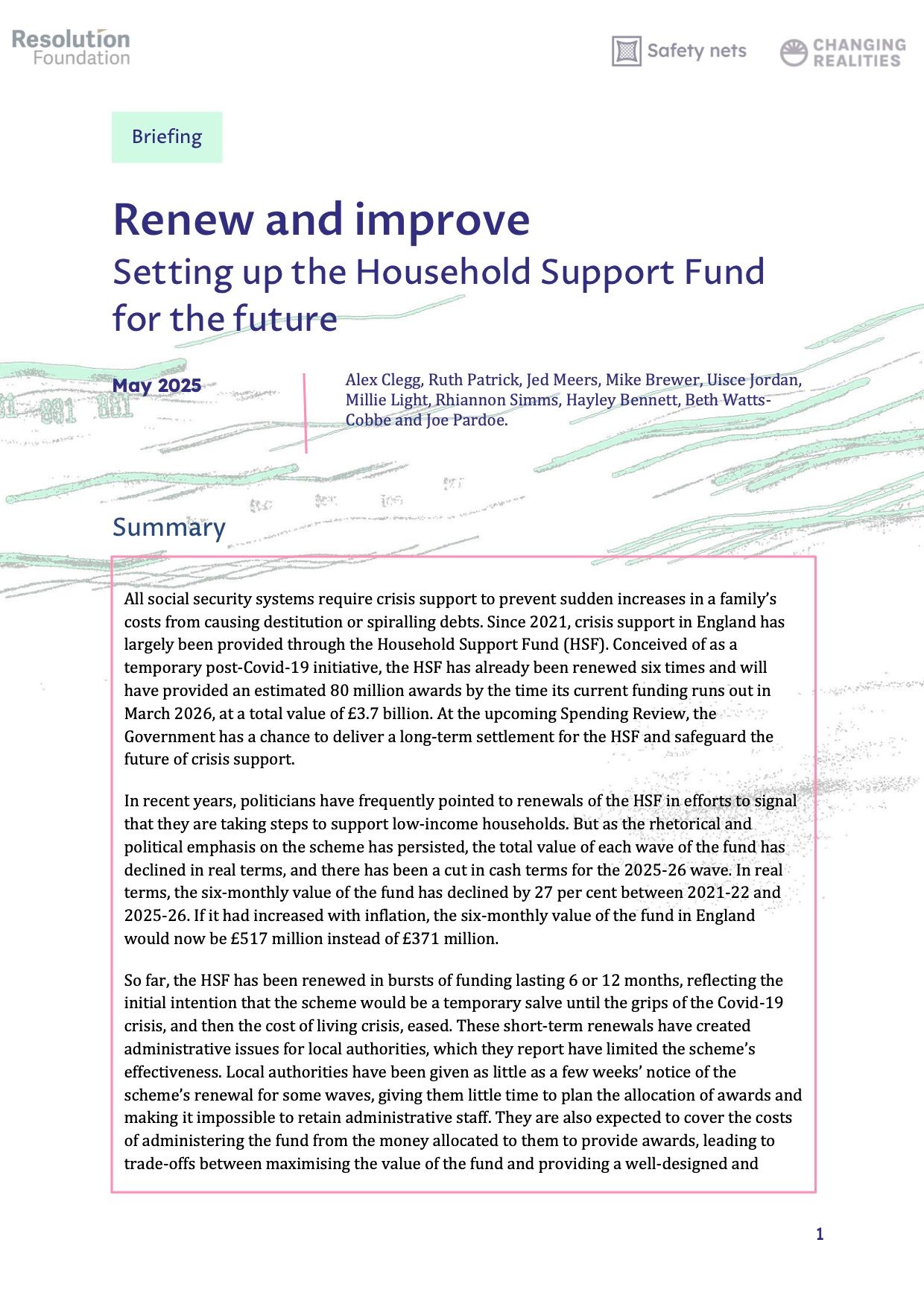
Renew and improve Setting up the Household Support Fund for the future
At the upcoming Spending Review, the Government has a chance to deliver a long-term settlement for the Household Support Fund, the largest form of discretionary crisis support in England. Conceived of as a temporary post-Covid initiative, the HSF has already been renewed six times and will have provided an estimated 80 million awards by the time its current funding runs out in March 2026, at a total value of £3.7 billion.
But the HSF needs reform as well as renewal. This briefing note draws on analysis of HSF management information data, as well as interviews with local authority workers delivering the scheme and participants of Changing Realities (a participatory project involving nearly 200 low-income parents) to outline the strengths and weaknesses of the first seven waves of the scheme. It then sets out recommendations for how a longer-term scheme could be improved.
Key findings
- The total value of each wave of the HSF has declined in real terms and has been cut in cash terms for the 2025-26 wave. In real terms, the six-monthly value of the fund has declined by 27 per cent between 2021-22 and 2025-26. If it had increased with inflation, the six-monthly value of the fund in England would now be £517 million instead of £371 million.
- Short-term bursts of funding and a lack of additional funding to cover administrative costs have created administrative issues for local authorities delivering the scheme. LAs have little time to plan delivery, and face trade-offs between maximising the value of their fund and providing a well-designed and targeted scheme.
- There has been wide variation between local authorities and over time in how HSF funding has been spent.
- Free School Meals support in the holidays is now the largest category of HSF expenditure. This is arguably not an ideal use of crisis support funding and would be better covered by an increased Free School Meals budget.
- The majority of HSF expenditure is delivered through vouchers. Vouchers can be less efficient than cash, and recipients express a preference for cash support as the most flexible and non-stigmatising way to respond to crisis needs.
- The HSF is frequently relied upon to top up inadequate benefit income, rather than as genuine crisis support. A scheme worth £1 billion per year (0.3 per cent of all UK welfare spending) and based on discretion rather than entitlement must not be seen as a panacea for more fundamental reform to shore up the gaps in the national social security system.
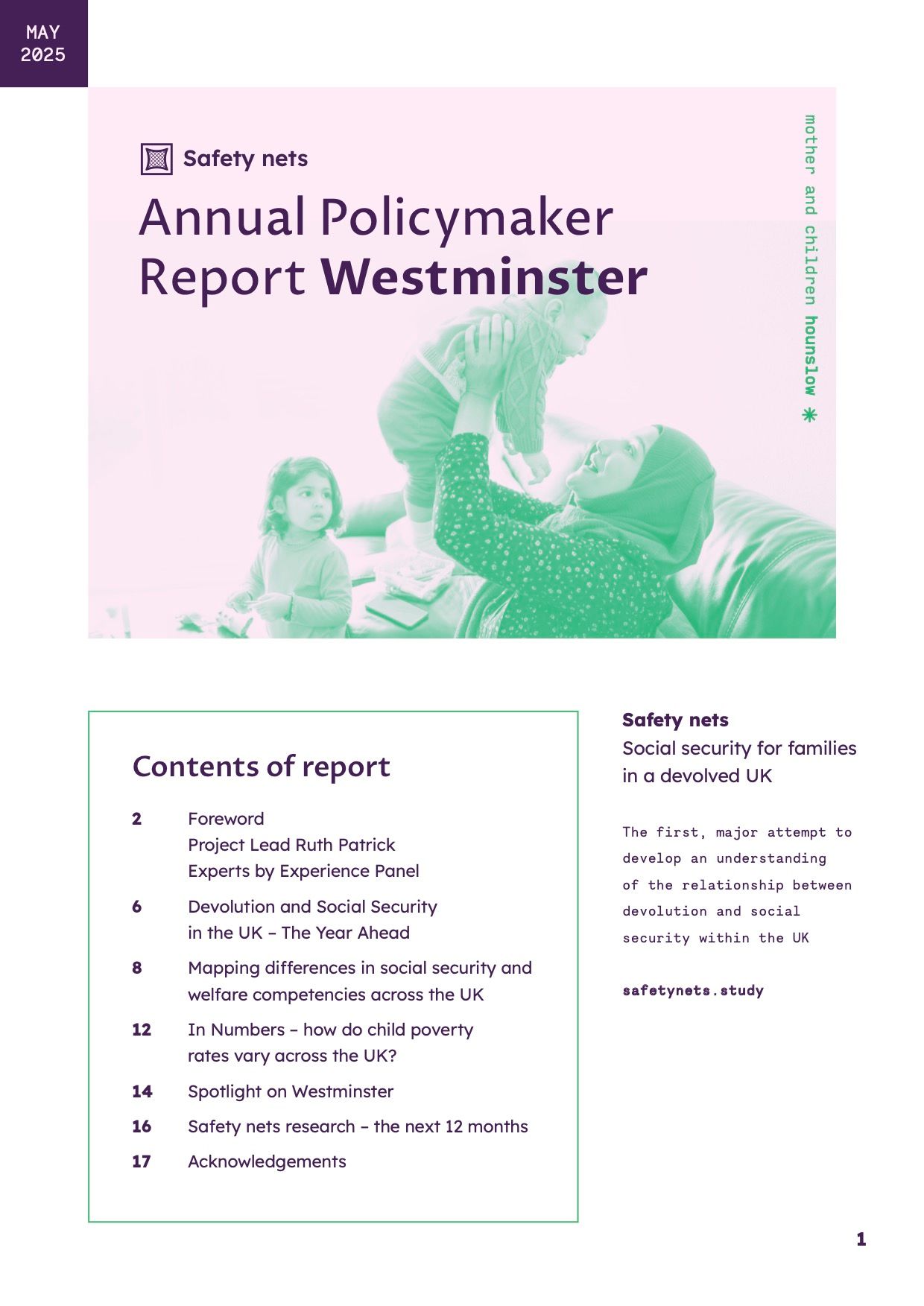
Annual Policymaker Reports 2025


This is the first in a series of Annual Policymaker Reports that summarise key findings from across the Safety Nets project for policymaker audiences. Each series has five reports containing key information for policymaker audiences in: England, Northern Ireland, Scotland, Wales, and UK-wide. The 2025 reports focus on child poverty.
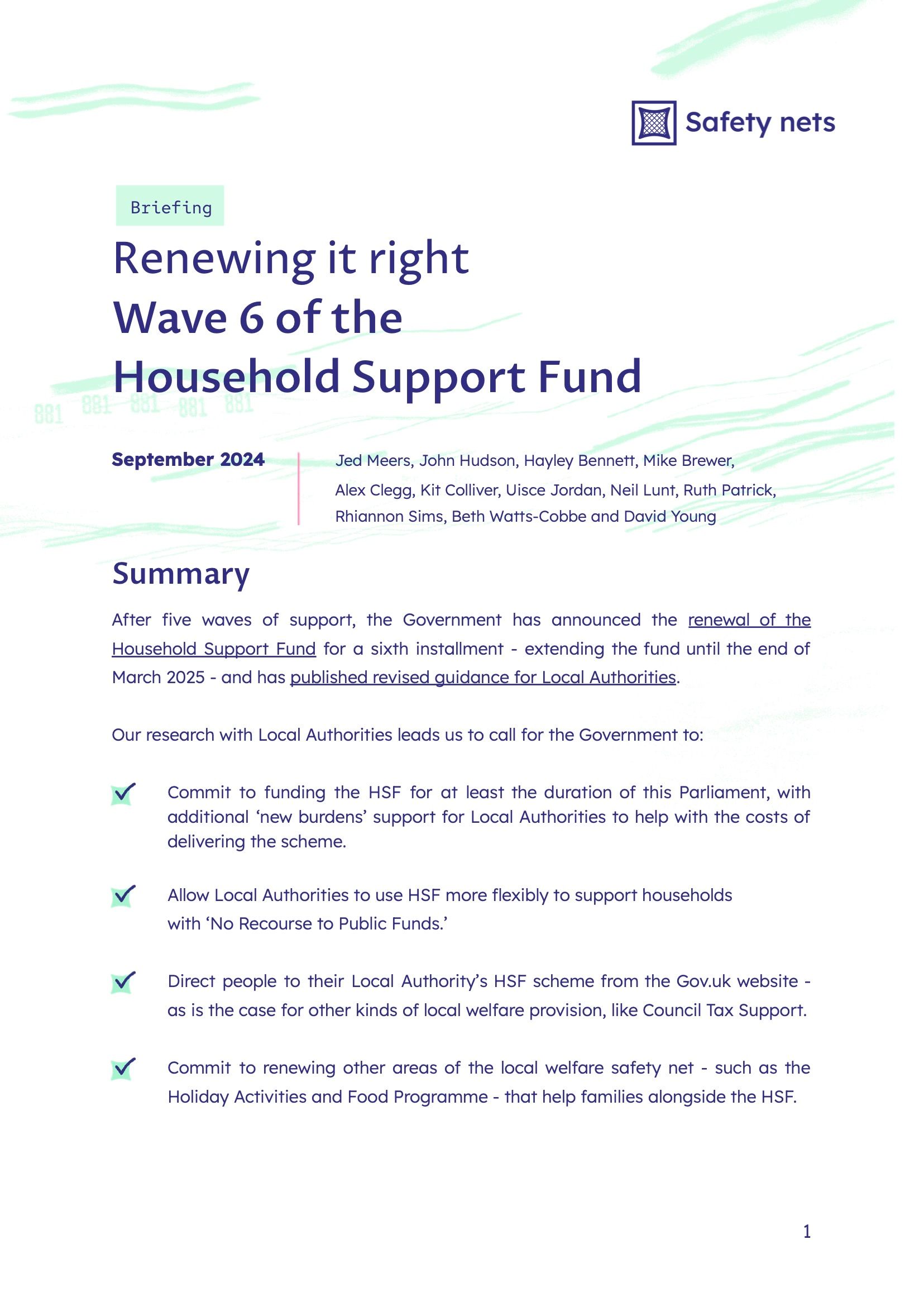
Renewing it right Wave 6 of the Household Support Fund


The Household Support Fund (HSF) is a discretionary fund introduced in 2021 for local authorities in England to support struggling households. After five waves of support, the Government has announced it will renew the HSF for a sixth installment - extending the fund until the end of March 2025.